Dyslexia is most commonly understood as a condition that causes difficulties with reading. It is less well known that dyslexia can also impact on organisation and time management skills, which is sometimes referred to as executive functioning.
What are the signs?
A child with dyslexia who has executive functioning issues may have difficulty:
remembering to take to school everything they need for the day
being organised and preparing their kit in advance
sticking with an activity and not being distracted
understanding what day of the week it is and what different things they need to do each day
remembering their routine and prioritising the tasks needed to get ready for school
What can you do to help?
There’s lots you can do to help a child with these issues. Here’s just a few ideas:
Get into a regular routine and stick to it. Children who struggle with time management often feel more secure and less anxious with a familiar routine.
Make checklists to break down a task or routine into smaller steps. Visual prompts work better than verbal reminders as they are constant and consistent.
Use calendars and planners – colour-coding often works really way to identify regular activities and highlight special events.
Encourage development of organisational skills with lots of repetition, reminders and practice.
How could TomTag help?
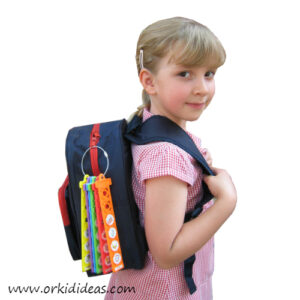
TomTag is ideal for all children with dyslexia as the picture symbols we use are easily recognisable and don’t rely on a child’s ability to read for TomTag to be effective.
Make morning and evening routine reminders for tasks that need to be completed and the order they should be done using an I know what to expect – morning and evening minikit or for more varied options try these kits I can do it self care skills or I know what to expect at home
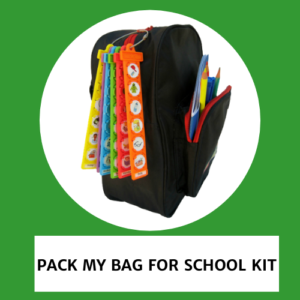
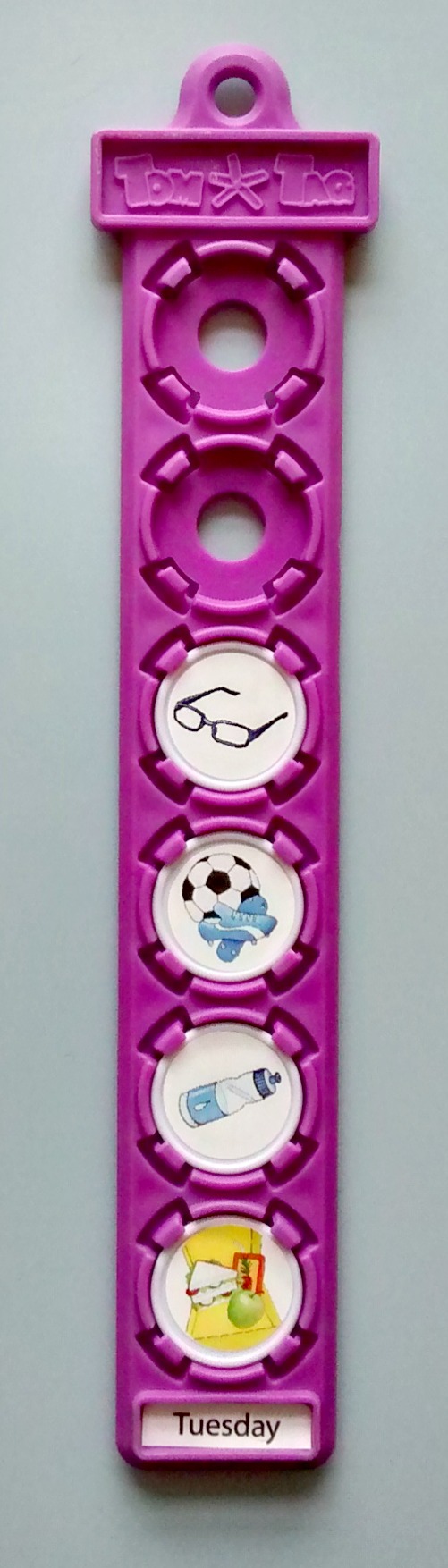
Create a school bag packing checklist using the I can do it pack my bag for school kit that will remind them exactly what they need to take to school each day, and bring home again.
Take advantage of TomTag’s colourful tags by colour-coordinating checklist and routine reminder tags with any planners, calendars or charts that you’re also using.
How do you teach a reluctant child how to pack their own bag with all the right things they need for the day ahead and to bring it all home again?
Clare, whose own children learnt this important skill with TomTag, recommends the following simple steps:
1. Select one day when there are not many items to take to school. Use only one tag from the TomTag pack to make a list of the relevant items and activities for that day.
2. Set aside some time the night before to pack the bag with your child and attach TomTag to their bag. Praise your child for remembering and packing everything they need for the day.
3. Ask your child to repack their bag at school using TomTag as a reminder of what to bring home. Check their bag when they return from school and praise them when they have been successful in bringing the correct items home.
4. Ask the child to pack their bag on their own for the same day using TomTag as a visual reminder of what items are needed. Then check their bag for them. Praise your child’s success. If something is forgotten, refer back to the tag and repack.
5. Ask your child to repack their bag at school using TomTag as a reminder of what to bring home. Check their bag when they return from school and praise them when they have been successful in bringing the correct items home.
6. Your child packs their own bag using TomTag as a visual reminder and does not have it checked. Praise your child’s success.
7. Choose another more complicated day and repeat the process. Gradually build up to a full week and using the full TomTag set on the child’s bag.
Packing their school bag independently, being organised and taking responsibility for their belongings are great life skills for all children to learn but are especially important for those with additional or special needs. TomTag uses only picture cues so it’s easy for any child to use.
We use cookies on our website to give you the most relevant experience by remembering your preferences and repeat visits. By clicking “Accept All”, you consent to the use of ALL the cookies. However, you may visit "Cookie Settings" to provide a controlled consent.
This website uses cookies to improve your experience while you navigate through the website. Out of these, the cookies that are categorized as necessary are stored on your browser as they are essential for the working of basic functionalities of the website. We also use third-party cookies that help us analyze and understand how you use this website. These cookies will be stored in your browser only with your consent. You also have the option to opt-out of these cookies. But opting out of some of these cookies may affect your browsing experience.
Necessary cookies are absolutely essential for the website to function properly. These cookies ensure basic functionalities and security features of the website, anonymously.
Cookie
Duration
Description
cookielawinfo-checkbox-analytics
11 months
This cookie is set by GDPR Cookie Consent plugin. The cookie is used to store the user consent for the cookies in the category "Analytics".
cookielawinfo-checkbox-functional
11 months
The cookie is set by GDPR cookie consent to record the user consent for the cookies in the category "Functional".
cookielawinfo-checkbox-necessary
11 months
This cookie is set by GDPR Cookie Consent plugin. The cookies is used to store the user consent for the cookies in the category "Necessary".
cookielawinfo-checkbox-others
11 months
This cookie is set by GDPR Cookie Consent plugin. The cookie is used to store the user consent for the cookies in the category "Other.
cookielawinfo-checkbox-performance
11 months
This cookie is set by GDPR Cookie Consent plugin. The cookie is used to store the user consent for the cookies in the category "Performance".
viewed_cookie_policy
11 months
The cookie is set by the GDPR Cookie Consent plugin and is used to store whether or not user has consented to the use of cookies. It does not store any personal data.
Functional cookies help to perform certain functionalities like sharing the content of the website on social media platforms, collect feedbacks, and other third-party features.
Performance cookies are used to understand and analyze the key performance indexes of the website which helps in delivering a better user experience for the visitors.
Analytical cookies are used to understand how visitors interact with the website. These cookies help provide information on metrics the number of visitors, bounce rate, traffic source, etc.
Advertisement cookies are used to provide visitors with relevant ads and marketing campaigns. These cookies track visitors across websites and collect information to provide customized ads.